CUSTOM PIN SIZE GUIDE
Custom pin size guide:
choose a readable size.
Use this custom pin size guide to find a size that keeps your artwork readable without becoming larger than the way it will be worn or used. One inch is the safest place to start.
THE SHORT ANSWER
Start at one inch. Move only when the artwork asks.
Stay smaller for simplicity
Three-quarter inch works when the icon is clear, the wording is minimal, and the pin should feel understated.
Move larger for information
Choose 1.25 or 1.5 inches when text, layered illustration, or distance visibility matters more than subtle scale.
FOUR USEFUL SIZES
What each size gives your artwork.
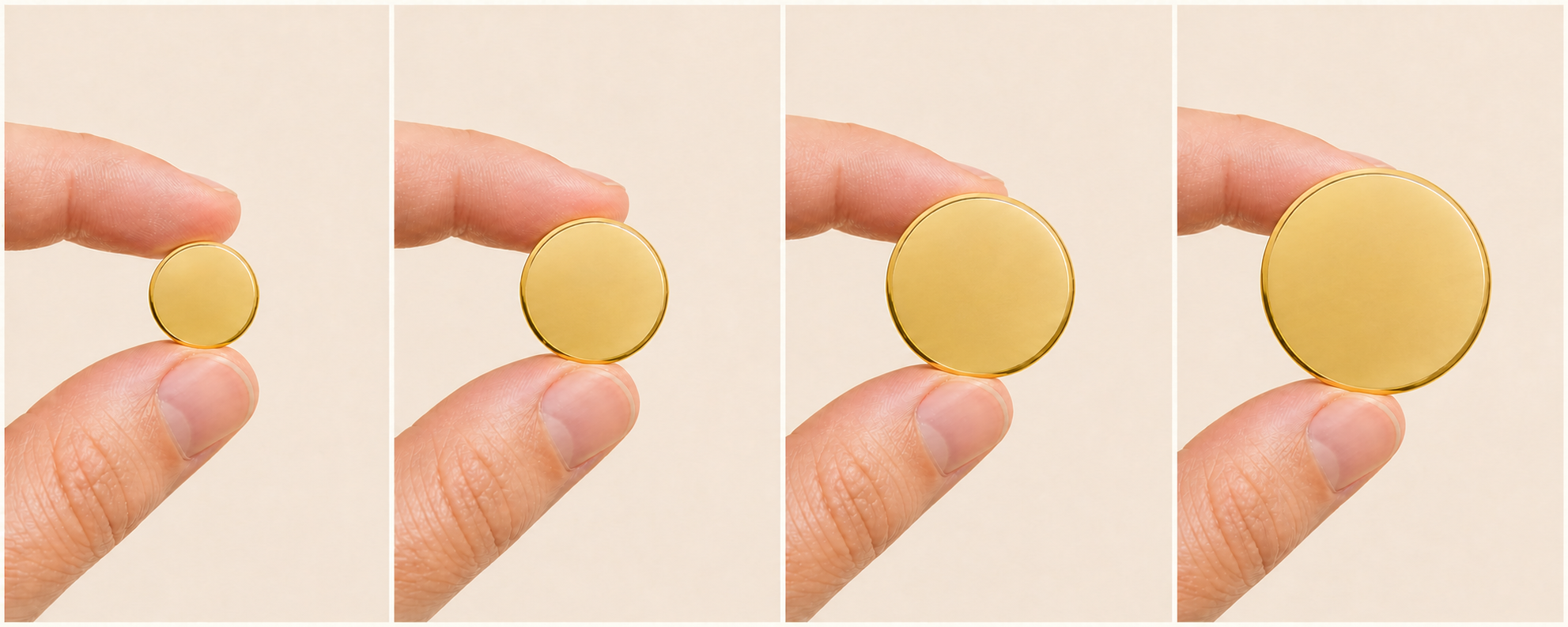
Price examples use 500 soft enamel pins with silver plating and butterfly clutches. The allocated mold cost is included. First-order standard worldwide shipping is free; duties and import taxes are excluded.
3/4"
19 mmSimple, minimal artworkSmall icons, short initials, subtle lapel placement
1"
25 mmThe most versatile starting pointLogos, event pins, team marks, general merchandise
1-1/4"
32 mmMore room for detailIllustration, multiple text lines, layered brand artwork
1-1/2"
38 mmHigh visibilityDetailed art, statement pieces, badges, presentation pins
These are visual and pricing starting points. A non-round pin is measured by its longest dimension.
SIZE FOLLOWS CONTENT
Let the smallest important detail decide.
The outside dimensions are only part of the decision. Lettering, narrow gaps, and the number of visual ideas inside the shape determine whether the artwork will remain readable.
Text needs breathing room
Long department names, dates, or multiple wording lines often need 1.25 inches or more. A larger pin cannot rescue lettering that is packed too tightly.
Simple art can stay small
A strong icon with one focal point can remain clear at 0.75 inch, especially when the shape and metal outline do most of the work.
Visibility changes the answer
A lapel pin viewed nearby can be subtle. An event pin, badge, or recognition piece meant to read from farther away benefits from more scale.
CONSTRUCTION MATTERS TOO
The same size can hold different kinds of detail.
Enamel styles use metal dividers between colors. Printed pins can reproduce photographs and gradients without those internal lines, which may change the size your design needs.
Soft enamel
Raised metal and recessed color favor bold shapes and intentional outlines. Explore soft enamel pins.
Hard enamel
A flat polished face suits clean shapes and controlled detail. Explore hard enamel pins.
Still deciding?
Compare both enamel surfaces before choosing the final specification. Read the comparison, or prepare your artwork.
SIZE QUESTIONS
Before you resize the artwork.
What is the most popular custom pin size?+
One inch is Pinform's most versatile starting point. It gives many logos enough room to read without making the pin feel oversized on a jacket, bag, or presentation card.
How is an irregular pin measured?+
The size is based on the longest outside dimension. A wide horizontal pin and a tall vertical pin can both be one inch even though their total surface areas differ.
Should detailed artwork always be 1.5 inches?+
Not automatically. Simplifying small details may produce a cleaner result than enlarging everything. We review the artwork before confirming the recommended size.
Does a larger pin cost more?+
Yes. Larger sizes use more metal and color. The estimator shows the current price difference immediately when you switch between the four available sizes.